
Improving reptile monitoring in the Pilbara
eDGES v2 – Project 1
Reptiles are declining at a global scale with >20% of the worlds’ species threatened by extinction. Efficient biomonitoring methods are crucial and because reptiles are often elusive and difficult to observe in the field (e.g. burrowing snakes and skinks), an eDNA approach could seem like an obvious solution. Unfortunately, the general notion is that eDNA biomonitoring is not suited for reptiles due to their low DNA shedding rate. However, 40% of Australia’s terrestrial vertebrates are reptiles, many of which are both endemic and endangered, so unless we can overcome this challenge, eDNA has a major limitation as a terrestrial biomonitoring tool on this continent. This project aims at developing new sampling methods specifically targeted at capturing reptilian eDNA in the field. This will be combined with in silico work to develop new metabarcoding-assays and expand existing reptile sequence databases for improved detection of reptilian eDNA. The outcome will be a series of new methods (and optimizations of existing ones) and reference libraries that combined will take reptile eDNA biomonitoring to a much-needed next level.
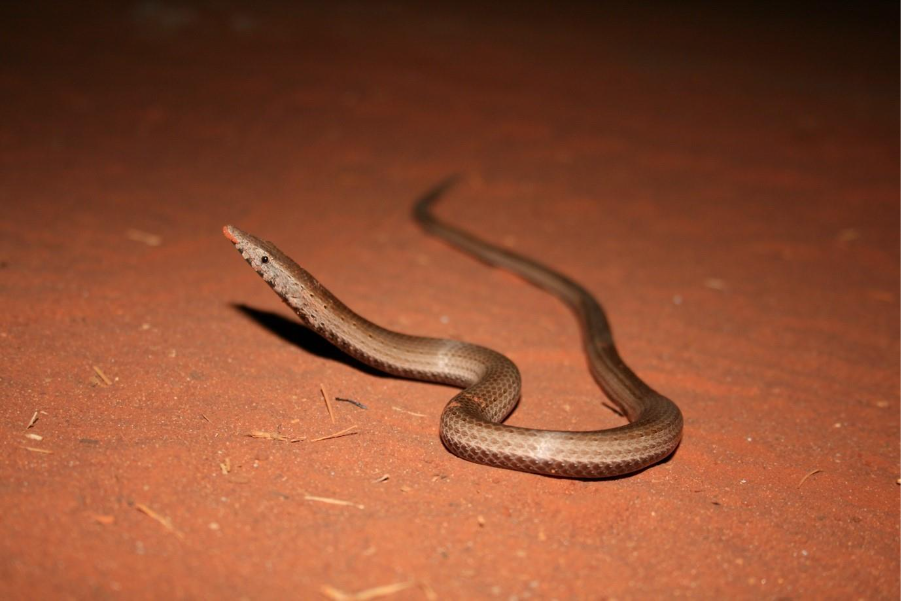
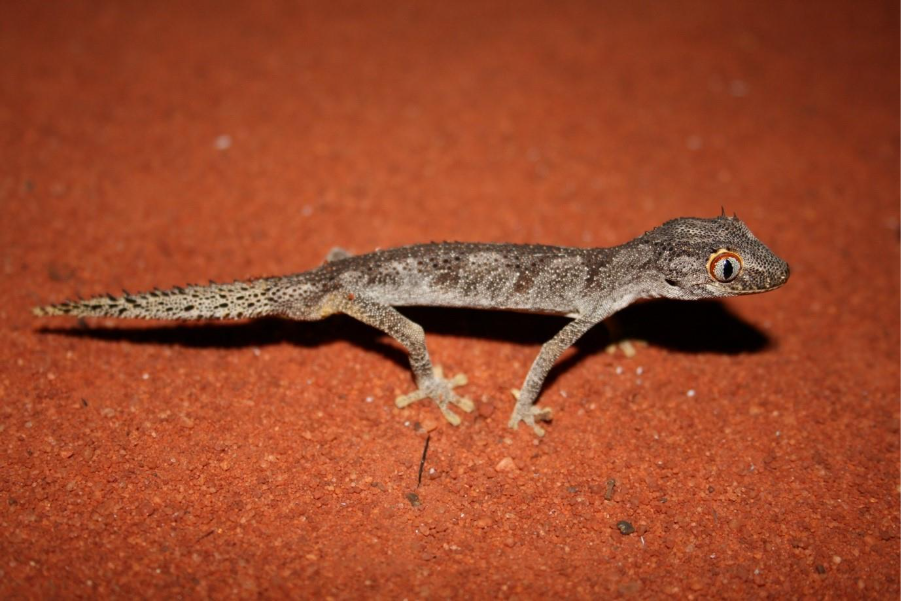
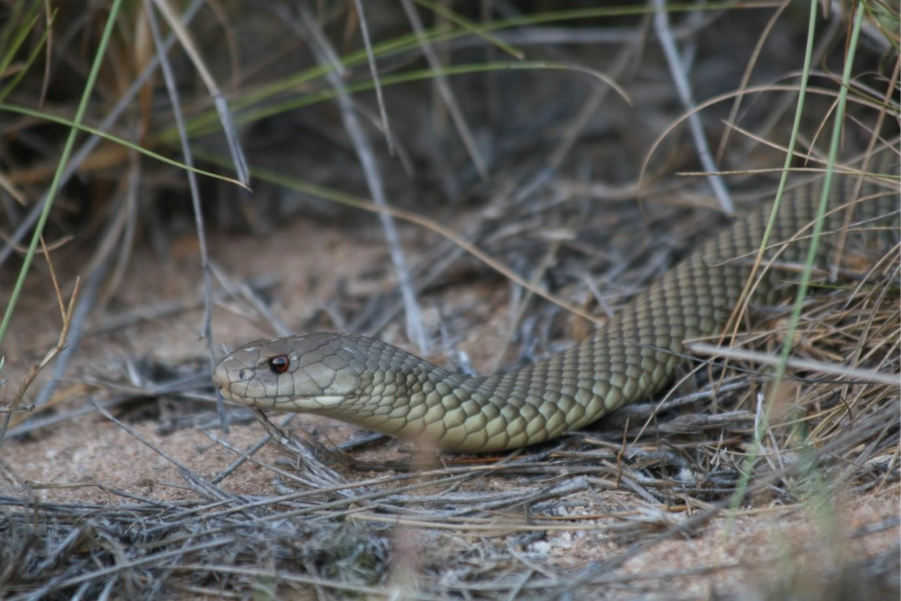
Figure 1: Scaly cold-blooded Pilbara residents are about to get tracked with eDNA, including (from left to right), Burton’s snake lizards, Spiny-tailed geckos, and Mulga snakes. Photo: Morten Allentoft
Overview of expected outputs and outcomes
The project commenced in August 2025 with the employment of Dr Joshua Newton and has since recruited PhD candidate Jake Dempsey as of January 2026. The first phase of the project included the construction of six custom-built reptile enclosures at Curtin University, designed as a controlled model system to refine and evaluate environmental DNA sampling methods for reptile detection. Our initial target species, the western tiger snake (Notechis scutatus), was temporarily housed in the enclosures for three weeks before being safely returned to their original locations. After the removal of snakes, eDNA samples were collected across multiple substrate types and time points, resulting in the collection of more than 1,000 samples to date. These samples will be used to assess the persistence of reptile DNA in terrestrial environments and to determine optimal sampling strategies for future fieldwork in the Pilbara region.
In parallel, we are currently collaborating with CSIRO’s National Biodiversity DNA Library initiative and the Western Australian Museum to coordinate the generation of mitochondrial genomes for approximately 160 Western Australian reptile species with sample collection commencing in mid-March. This effort aims to fill key reference gaps resulting in a near-complete mitochondrial reference database for Western Australian reptile fauna that will directly support the design and validation of new reptile eDNA primers.
This work will feed directly into phase 2 where novel sampling approaches and newly developed assays will be tested throughout the Pilbara, to test the methods under harsh conditions in one of the most reptile diverse regions in the world.
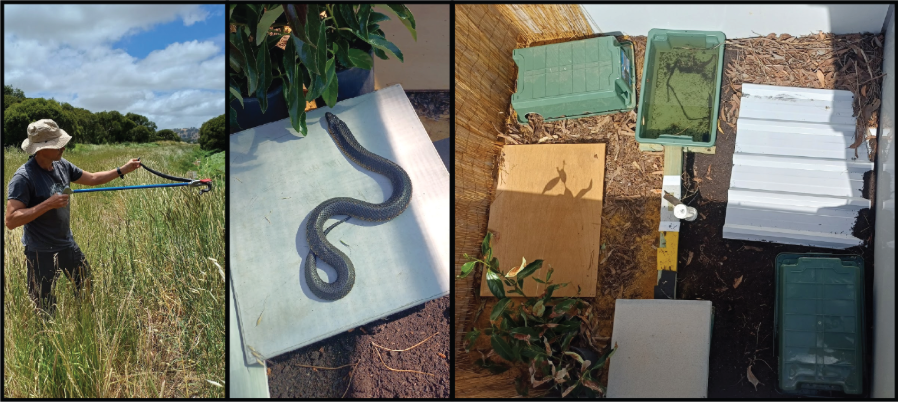
Figure 2: Experimental setup used to investigate environmental DNA sampling methods for reptiles. From right to left: Capture of a western tiger snake (Notechis scutatus) by Morten Allentoft prior to placement in experimental enclosures. Individual tiger snake within an enclosure housed at Curtin University. Overhead view of the enclosure setup showing the range of substrates and structures (e.g., shelter boxes, cover boards, soil, and water) used to test different environmental sampling approaches for detecting reptile eDNA.
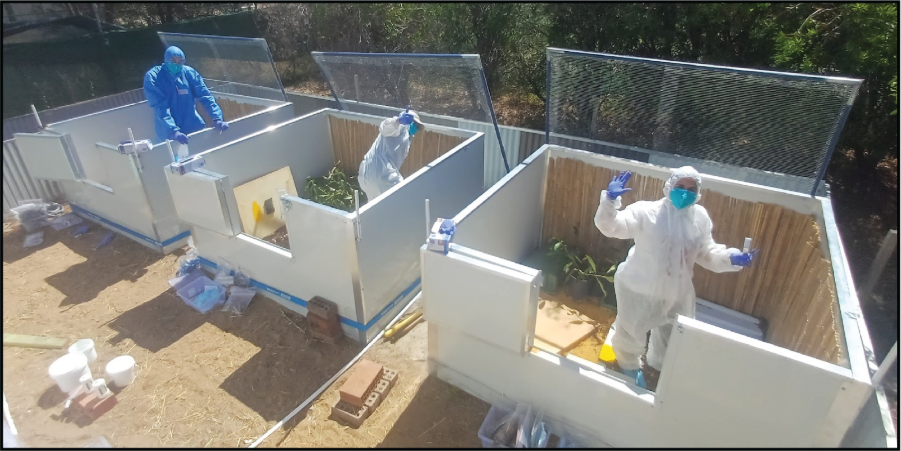
Figure 3: Enthusiastic eDGES staff collecting environmental DNA samples within reptile enclosures following the removal of tiger snakes.