
Mapping life in the Northern Pilbara
eDGES v2 – Project 5
The Pilbara is widely acknowledged as the powerhouse of the Australian economy. The extensive economic activity and widespread media reports on global warming, marine heatwaves and invasive species give the impression that the Pilbara marine environment is degraded. It contains diverse habitats, including mangroves, rocky shores, coral reefs, mudflats, and estuaries that each support highly localised species endemism. The marine life biodiversity of the Pilbara is thought to be largely intact, despite being the region containing major facilities for mineral extraction industries. The marine biodiversity of this region has been well-preserved through effective management practices. Also, ports and other industrial sites are adjacent to high biomass ecosystems of native species that provide little opportunity for invasive species to establish. Despite the economic importance of the Pilbara and its high levels of endemic biodiversity, many species remain undescribed. New biodiversity of the Pilbara marine area will be described for the first time. An example group, the air-breathing marine slugs (Onchidiidae) will be studied in detail and the undescribed species from the Pilbara will be formally described. The huge biodiversity of marine life in the northwestern Australia will be summarised in a book to bring this knowledge into one place that showcases the natural variety that the Pilbara coast supports.
Onchidiids live on intertidal sandy, muddy and rocky shores and in mangroves. They secrete themselves in nooks and crannies when the tide is in to escape predation. As the tide goes out onchidiids emerge to feed and reproduce. They are diverse in the Indo-West Pacific but are an extremely difficult family taxonomically. Competent descriptions require detailed studies of the species in life and anatomical studies of their general morphology, teeth, and reproductive and digestive systems. Recent advances in DNA sequencing have greatly enhanced our ability to delineate species relationships in the group.
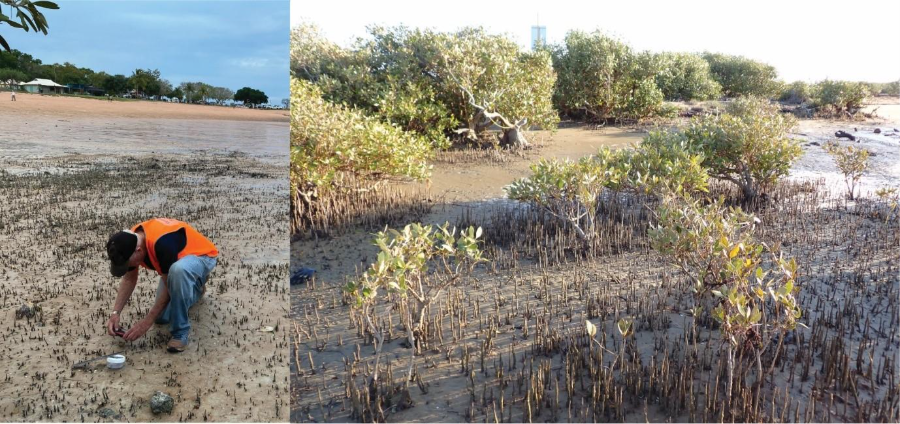
Figure 5.1: The habitat in which the sea slugs were found during field sampling.
Associate Professor Benoît Dayrat (Pennsylvania State University) is the world expert on onchidiids. He has studied onchidiids and published on the group in a wide range of countries over the last 15 years, including work in the Northern Territory. We knew there are species in northern Western Australia, but they have never been studied. eDGES2 has provided us with an opportunity to work with Dr Dayrat on this fascinating group. Dr Dayrat came to Curtin in January 2025 for a month to work on the project. We undertook a field program in Onslow, Dampier and Point Samson which allowed him to examine the species alive and for more material to be collected.
A comprehensive collection of onchidiids has been completed from Carnarvon to Broome, 18 sites over four field trips. This has been supplemented by examination of specimens from the Kimberley in the WA Museum collections. All specimens were photographed and dissected. DNA sequencing of 4 gene regions (COX1, 16S, 28S and ITS) has been completed. Dissected radulae (molluscan teeth), digestive and reproductive systems of all specimens have been sent to Pennsylvania for Dr Dayrat to analyse. A provisional analysis is that nine species from four genera have been recorded, two of which are currently thought to be new to science.
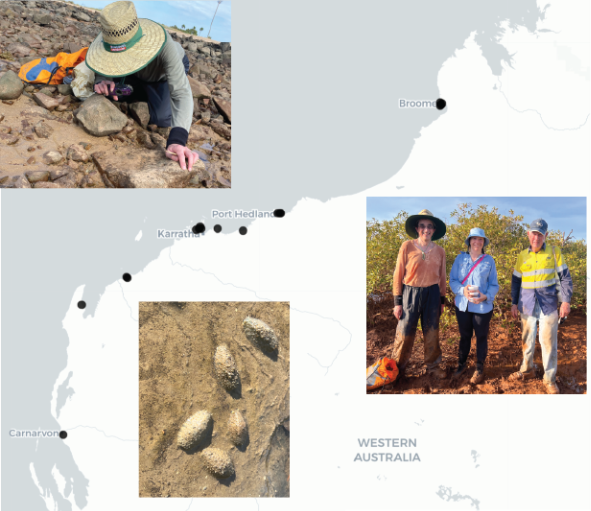
Figure 5.2: Extensive sampling of onchidiids in the Northwest of WA, took place between 2023 and 2025.
The tremendous development of industrial and port facilities in recent decades may give the impression that the marine environment of the Pilbara has been severely degraded. There are of course nodes where port and industrial facilities have been constructed, but there are also large parts of the Pilbara coastline that are relatively untouched. To make the information available to upper secondary students and the general public, the current status of the marine environment will be brought together in an ebook which will be published free on the internet. The initial Pilbara coverage has been broadened to include the coastline of northwestern Australia between Shark Bay and Broome. Chapter 1 will set the scene – where the region is, its marine biogeographic setting, regional currents, etc. There will be chapters describing the main habitats: rocky shores, sandy shores, mangroves, coral reefs and plankton. Later chapters will discuss iconic species, fish and fisheries management, conservation reserves and the present status and future outlook of the region.