
Living waters of Western Australia (LiWA)
eDGES v2 – Project 7
Wetlands are vital ecosystems that support a rich biodiversity and provide several ecosystem services essential for ecosystem and human health, including cycling nutrients, filtering contaminants, and controlling water quality. However, wetlands are globally under threat due to mounting anthropogenic pressures, including in Western Australia (WA) which has many hydro-geologically, taxonomically, and functionally diverse wetland ecosystems. The importance and fragility of these environments is often undervalued by the public and even at a scientific level, knowledge on their biodiversity is insufficient. To this end, in this project are attempting to improve our understanding of the current and historical “health” of wetlands and to educate and inspire the broader community to conserve wetlands in Western Australia. A key contribution of this project will be the development of the novel AqWATIC “health” index derived from eDNA data which has the potential to serve as the basis of ongoing biomonitoring in WA wetlands. To calibrate the AqWATIC Index we have sampled 171 sites around south-western Australia (Figure 7.1) spanning a broad range of different wetland types (Figure 7.2). From each site, we have collected six water samples and amplified a total of 13 metabarcoding assays.
In addition to the present-day health of wetlands, we have also begun exploring the potential to retrieve “ancient” community information from these environments using cores. To date, we have cored two wetlands are currently processing these samples.
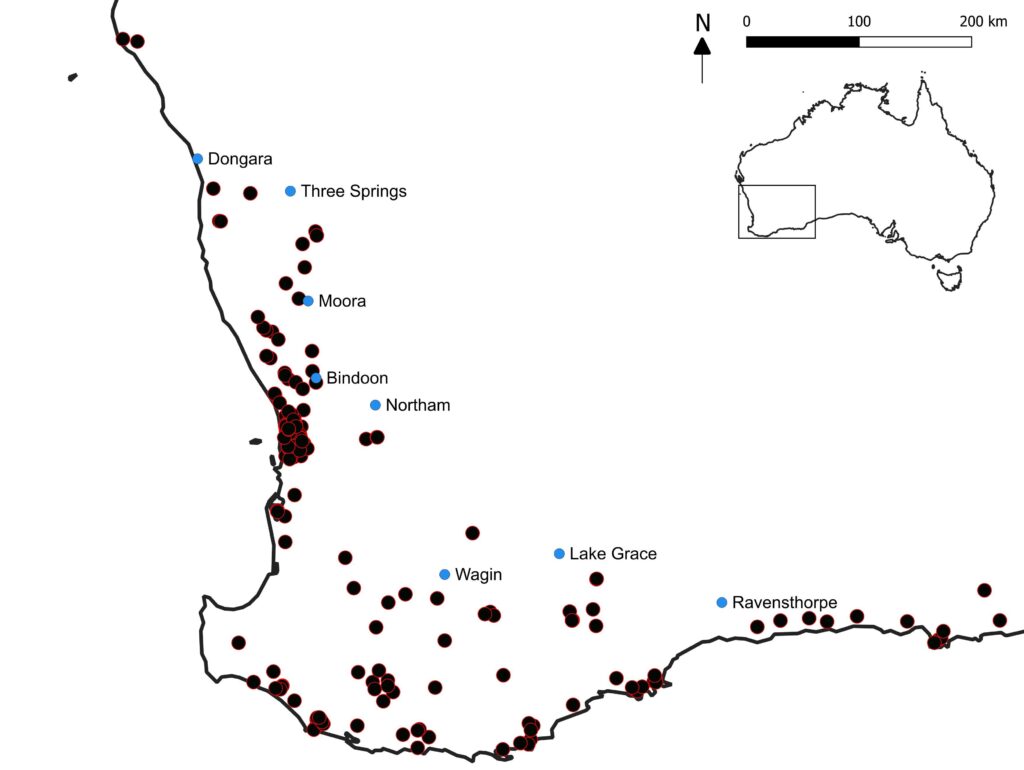
Figure 7.1: Map of where water samples were taken from wetlands during the course of this project. A total of 171 sites were sampled between 2024-2025.
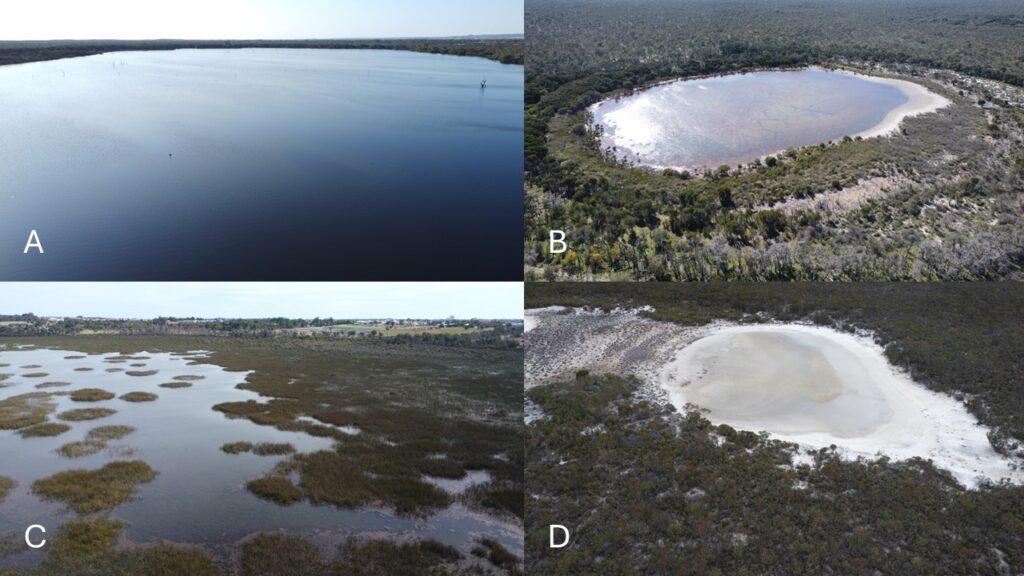
Figure 7.2: Examples of the range of wetlands sampled during the study. Of the 171 sites sampled, the majority were freshwater wetlands (e.g. A, B, C) although a selection of salt lakes (D) were also sampled to assess the utility of the AqWATIC Index in these different environments.
Overview of outputs and outcomes
We have calibrated and optimised the AqWATIC Index which presents a score of wetland “health” from 1 – 100 with higher scores reflecting “healthier” environments. To evaluate the performance of the AqWATIC Index, we devised an independent metric of anthropogenic disturbances (Wetland Pressure Index) which is a culmination of a sites remaining riparian vegetation, nutrient levels, presence of invasive fish species and hydrological changes (Figure 7.3). The AqWATIC Index demonstrates a strong correlative relationship with the Wetland Pressure Index, indicating that the AqWATIC Index is a useful indicator of anthropogenic disturbance in freshwater wetland ecosystems. A manuscript is currently being prepared for publication.
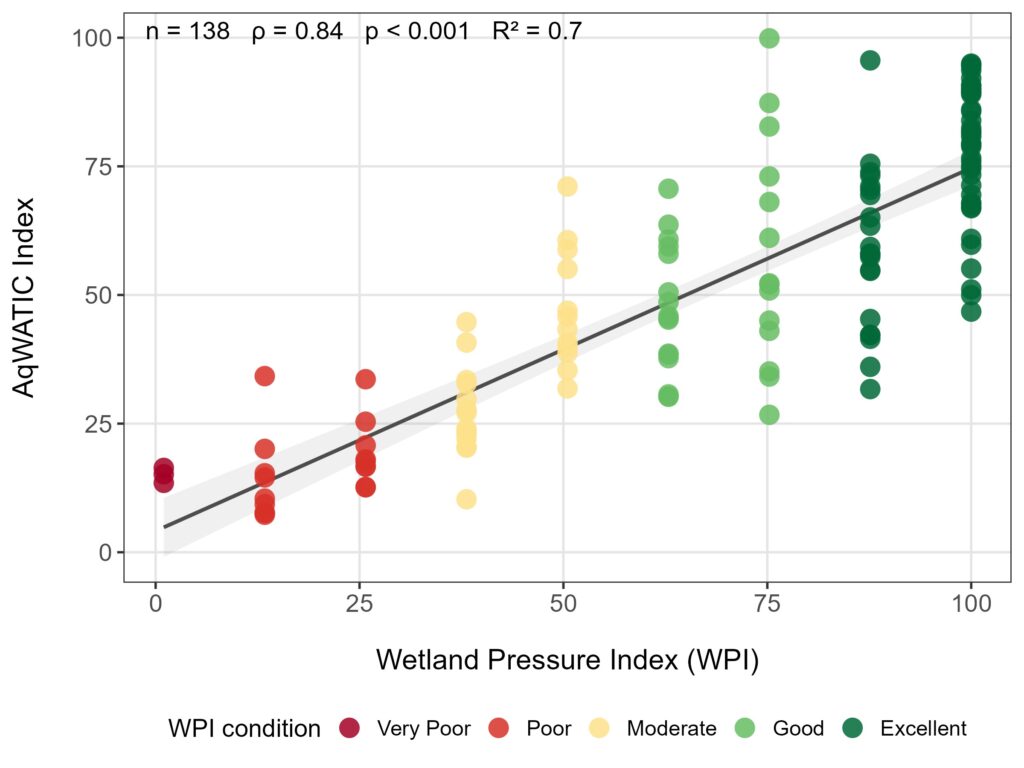
Figure 7.3: Results of the AqWATIC eDNA index score for each site (X axis) compared against the Wetland Pressure Index (Y axis), an independently derived measure of anthropogenic pressure at each wetland. The Wetland Pressure Index is calculated independently of AqWATIC and integrates four components: the extent of remaining native vegetation surrounding the wetland, trophic status, presence of invasive fish, and the degree of hydrological modification.
We have collected two cores for ancient DNA analysis from Thompsons Lake and Forrestdale Lake on the Swan Coastal Plain. We are currently processing the cores to determine whether or not we can detect ancient DNA, deposited hundreds or thousands of years ago which would enable us to reconstruct the communities of these wetlands and potentially identify how they have changed since European colonisation.
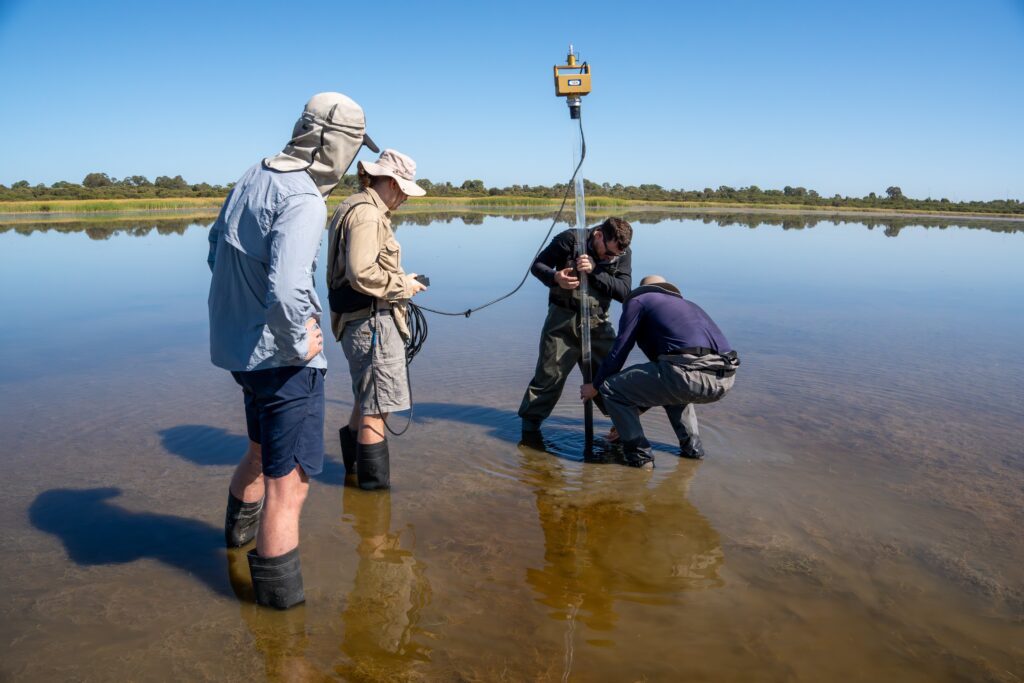
Figure 7.4: Collecting a core sample at Forrestdale Lake in January 2026 with collaborators from Department of Biodiversity, Conservation and Attractions and Edith Cowan University.