
Broad-scale monitoring of land ecosystems with eDNA
eDGES v2 – Project 6
This project is a continuation of v1 and, besides continuing aiming to validate DNA-based tools for assessing terrestrial biodiversity, we also begin the development of an eDNA-based metric for terrestrial ecosystem evaluation. The initial focus is on streamlining sampling methods to improve accessibility and efficiency, followed by studying spatial and temporal variability to establish reliable monitoring protocols.
Ultimately, the project is going to contribute to the development of a pathway toward an eDNA-based ecological condition metric for terrestrial environments. By engaging with and empowering a diverse group of end users—including indigenous ranger groups, citizen scientists, and land managers—the project will help to build capacity for long-term, community-led ecosystem monitoring. The outcomes of the case study at Olympic Dam in project v1 provided a foundation for expanding eDNA biomonitoring across Australia’s terrestrial ecosystems, particularly in regions where conventional monitoring remains impractical or prohibitively expensive.
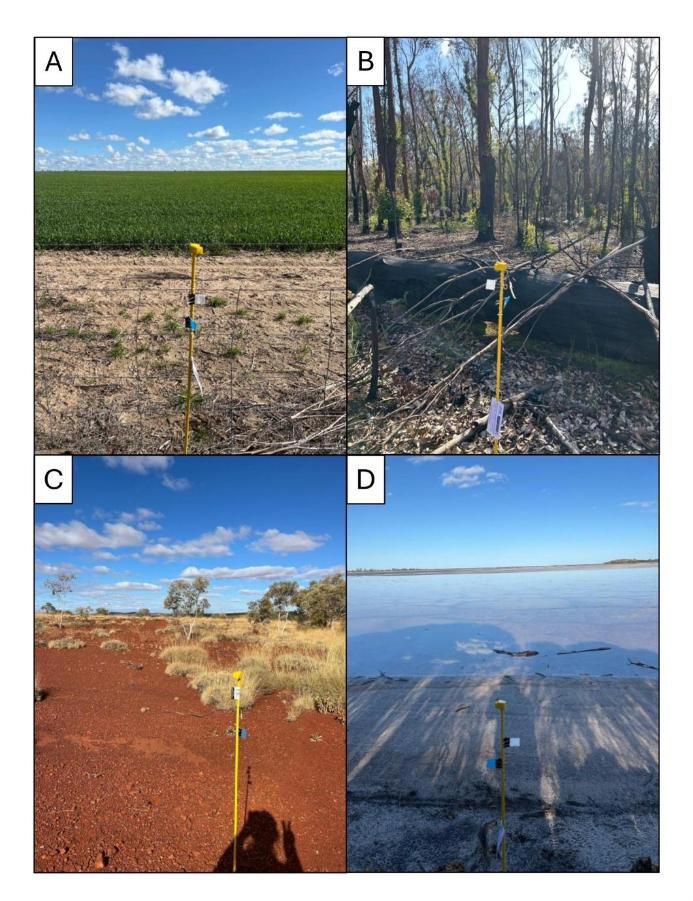
Figure 1: Airborne DNA sampling in four different Western Australian ecosystems. This sampling will be conducted every two months for one entire year to study the temporal aspect of environmental DNA across different ecosystems (A – wheatbelt; B – Karri forest; C – Pilbara region; and D – transient wetland in an arid region.
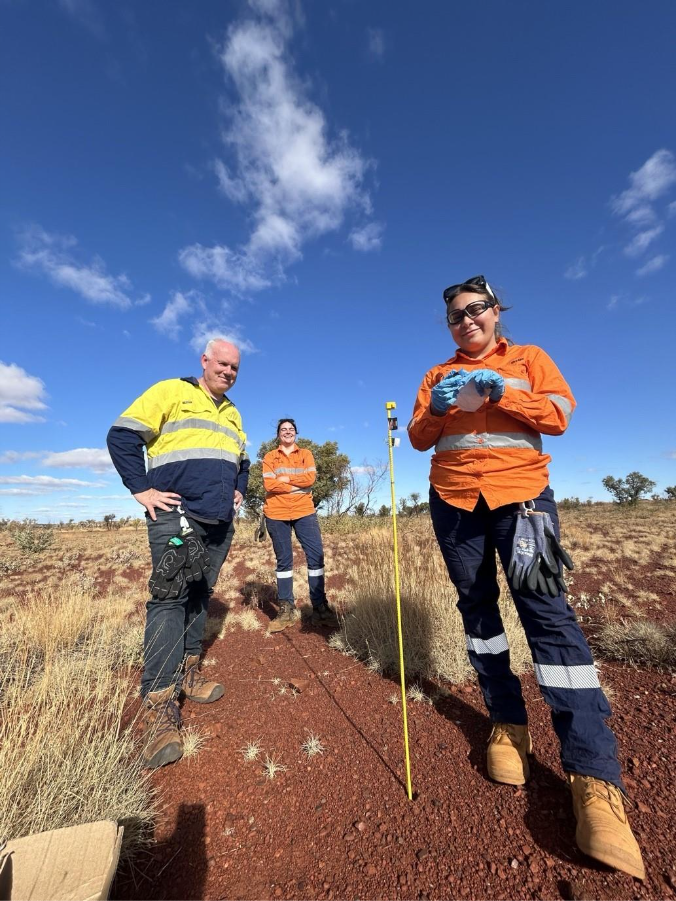
Figure 2: Curtin Professor Paul Nevil training the BHP Rehabilitation Team at the Yandi site for airborne DNA sampling in June 2025.
Overview of expected outputs and outcomes
- The broad-scale study location has shifted from Olympic Dam to the Pilbara due to logistics and alignment with other eDGES’ projects goals. A first recognising field trip has been conducted in June 2025.
- A temporal study was designed, and sampling is currently underway (Figure 1 and 2). The goal is to assess temporal variation in airborne DNA detection across five Western Australian ecosystems, including the Pilbara.
- A workshop titled “How to integrate eDNA and remote sensing” was held in Perth in August 2025 with participation from experts in both fields, including Curtin, BHP, CSIRO and Cary Institute of Ecosystem Studies. The aims were to plan a large-scale eDNA monitoring in the Pilbara and to begin developing an ecosystem condition metric combining both tools. A manuscript outlying the outcomes of this workshop is being prepared.