
eDNA and 'moving beyond the barcode' for subterranean fauna detection and conservation
eDGES v2 – Project 2
Australia’s subterranean environment is internationally renowned as a global biodiversity hotspot for groundwater fauna. It is also recognised for the large number of short-range endemic invertebrate species, in addition to having one of the highest stygofauna densities in the world. This diversity remains largely undescribed due to the limited access to these underground environments. This project aims to develop new high-resolution eDNA tools for characterising, monitoring and conserving the genetic diversity and community structure in these habitats. This project will continue to generate a high-resolution mitogenome reference database for selected taxa across geographical sampling points from the Pilbara to facilitate the investigation of intraspecific genetic diversity and differentiation in greater detail than has been attempted before.
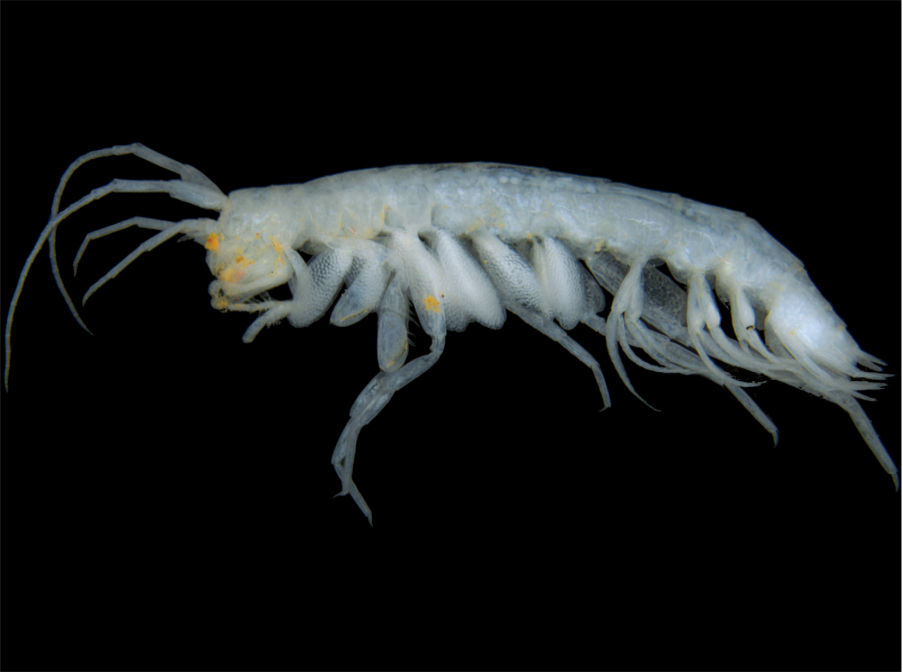
Figure 1: Image of Amphipod.
Overview of expected outputs and outcomes
- Field samples and subterranean specimens for mitochondrial sequencing from the Ethel Gorge Stygobiont Threatened Ecological Community were obtained by BHP contracted consultants with site access granted as part of regular monitoring of BHP activities in this WA region.
- A total of 170 complete or near complete mitochondrial genomes have been sequenced to date for the mitogenome reference database from the Great Artesian Basin and two locations in the Pilbara region. Ongoing mitogenomic work will focus on two other locations in the Pilbara region to capture the breath of intraspecies diversity for these short-range endemic species. Over 100 animals from Ethel Gorge are currently being prepared for shot-gun sequencing and eDNA assay design and validation.